







About the script
Akkha-Rik
अक्खा-रिक लिपि
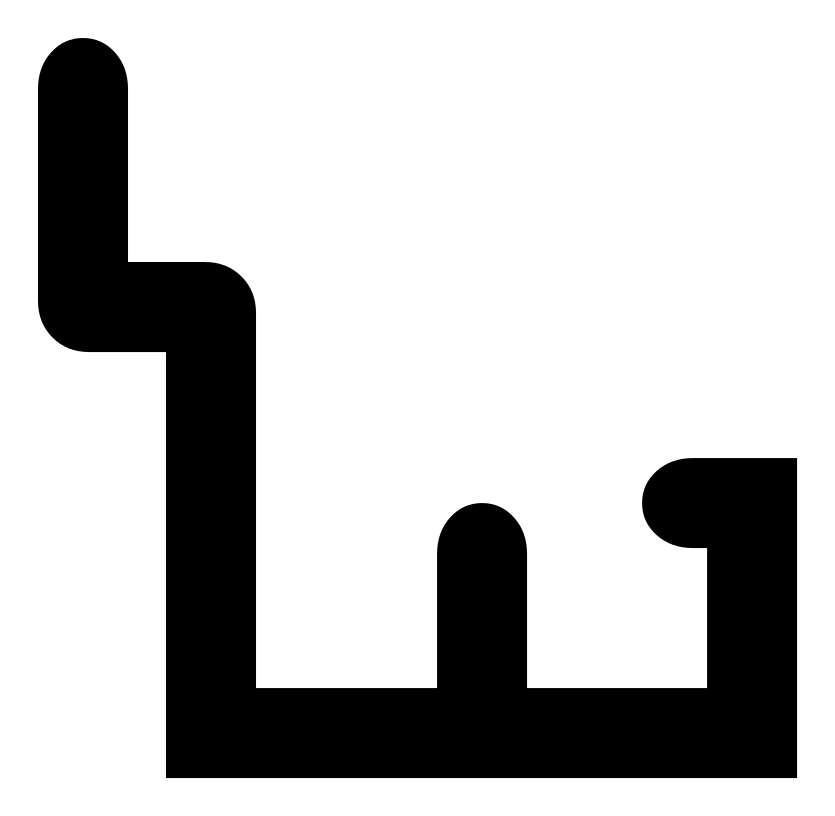
The Akkha-Rik script comprises 31 base consonants, each in one-to-one correspondence with a Devanagari consonant. A descendant of the ancient Brahmi family, the script has been used to write Magar — a Tibeto-Burman language of Nepal and northeast India — since at least the eleventh century, traditionally associated with the reign of Mukunda Sen of Palpa-Butwal. Devanagari has since become the more common medium for Magar publishing, but Akkha-Rik survives in cultural, pedagogical, and ceremonial use.
आक्खा-रिक लिपिमा ३१ वटा आधारभूत व्यञ्जन छन्, जसमा प्रत्येकको देवनागरी व्यञ्जनसँग एक-एक सम्बन्ध रहन्छ। यो प्राचीन ब्राह्मी परिवारको शाखा हो, र कम्तीमा एघारौं शताब्दीदेखि — परम्परागत रूपमा पाल्पा-बुटवलका राजा मुकुन्द सेनको शासनसँग जोडिएको — नेपाल र पूर्वोत्तर भारतमा बोलिने तिब्बती-बर्मेली भाषा मगरको लेखनमा प्रयोग हुँदै आएको छ।
One letter, one Devanagari letter
एक अक्षर, एक देवनागरी अक्षर
That correspondence is what makes the script learnable in weeks rather than months for anyone who already reads Devanagari: the sound system is familiar, and only the shapes are new.
- कka
- खkha
- गga
- घgha
- ङṅa



Preface
प्रस्तावना
This book introduces the Akkha-Rik script — a devotional writing system designed for Nepali and monastic use — to learners who are already literate in Devanagari, Tibetan, or another Indic script.
यो पुस्तकले अक्खा-रिक लिपि — नेपाली र भिक्षु प्रयोगका लागि निर्मित एक धार्मिक लेखन प्रणाली — लाई देवनागरी, तिब्बती, वा अन्य भारतीय लिपि जान्ने शिक्षार्थीहरूसामु प्रस्तुत गर्दछ।
Each letter in the Akkha-Rik script corresponds one-to-one with a Devanagari consonant or vowel, so a reader familiar with Nepali can focus almost entirely on recognising and writing the new visual forms.
अक्खा-रिक लिपिको प्रत्येक अक्षर देवनागरीको कुनै न कुनै व्यञ्जन वा स्वरसँग एक-एक गरी मेल खान्छ; त्यसैले नेपाली जान्ने पाठकले प्रायः नयाँ दृश्य रूप चिन्न र लेख्न मात्र ध्यान दिनु पर्दछ।
How to use this book
यो पुस्तक कसरी प्रयोग गर्ने
- 1
Work through the units in order — each new letter builds on what came before.
एकाइहरूलाई क्रमशः पढ्नुहोस् — प्रत्येक नयाँ अक्षर अघिल्लो अक्षरमाथि आधारित छ।
- 2
For each letter, study the model, hear the audio, then practice on your own.
प्रत्येक अक्षरको नमूना हेर्नुहोस्, ध्वनि सुन्नुहोस्, अनि आफैं अभ्यास गर्नुहोस्।
- 3
Tap the speaker icon next to a letter or word to hear it — a recorded clip where we have one, otherwise your browser’s built-in voice (not every browser supports this).
कुनै पनि अक्षर वा शब्दको छेउमा भएको स्पिकर आइकन छुनुहोस् — रेकर्ड गरिएको उच्चारण उपलब्ध भए त्यही, नभए ब्राउजरकै आवाज बज्छ (सबै ब्राउजरमा यो सुविधा हुँदैन)।
- 4
Use “Save as PDF” on any page to print a clean 8.5 × 11 in copy with phonetic notation.
कुनै पनि पानामा "Save as PDF" प्रयोग गरेर ध्वन्यात्मक अंकनसहित ८.५ × ११ इन्चको सफा प्रति छाप्नुहोस्।
- 5
The Reference Plates at the back show the complete alphabet — consult them whenever you need to.
पुस्तकको अन्त्यमा रहेका सन्दर्भ पानाहरूले सम्पूर्ण वर्णमाला देखाउँछन् — आवश्यक परेका बेला सहायता लिनुहोस्।
A note on transliteration
Throughout this book, each Akkha-Rik letter is labelled with a Roman transliteration code (for example k, K, G, T). Lowercase codes mark unaspirated consonants; uppercase codes mark aspirated or retroflex/dental dark-sounded counterparts. These codes match the internal glyph names used in the typeface.
यस पुस्तकभरि, प्रत्येक अक्ख-रिक अक्षरलाई रोमन लिप्यन्तरण सङ्केत (जस्तै k, K, G, T) द्वारा चिनाइएको छ। साना अक्षरले अल्पप्राण व्यञ्जनहरू र ठूला अक्षरले महाप्राण वा मूर्धन्य/दन्त्य गम्भीर व्यञ्जनहरू देखाउँछन्।
Further reading
- Magar Akkha Script · Omniglot
- About Magar Akkha Script — is it part of Brahmi? · atoznepal.info
- Introducing the Magar Akkha Script (L2/11-144) · Unicode Consortium